
How to select right microwave digestion equipment
If you want to buy a microwave digestion system for a laboratory, Selecting Right Microwave Digestion Equipment would require looking into sample type, digestion chemistry, throughput, and analytical instrument (ICP-OES, ICP-MS, AAS, etc.), rather than simply buying the highest-powered model.
1. Define your application first
Tell the supplier what you will digest:
- Food and feed
- Soil, water and environmental samples
- Geological/mining samples
- Metals and alloys
- Pharmaceuticals
- Polymers/plastics
- Biological samples
- RoHS/electronic materials
Microwave digestion is commonly used as sample preparation before ICP-MS, ICP-OES and AAS analysis.
2. Decide how many samples you need per batch before Selecting Right Microwave Digestion Equipment
For a routine laboratory, look at systems offering approximately 20–40+ vessels. For high-throughput laboratories, consider larger rotor systems or continuous/sequential systems.
For example, Anton Paar’s Multiwave range offers racks up to 41 positions and operation up to 300°C.
3. Check the critical specifications
When requesting quotations, ask for:
| Specification | What to look for |
|---|---|
| Temperature | Ideally up to 250–300°C |
| Pressure | High-pressure closed vessels; preferably ≥40–80 bar depending on application |
| Microwave power | Around 1,500–2,000 W for many laboratory systems |
| Vessels | PTFE/TFM/PEEK or appropriate high-purity materials |
| Temperature monitoring | Direct or reliable vessel/sample temperature monitoring |
| Pressure monitoring | Preferably individual/intelligent pressure monitoring |
| Capacity | 20–40+ vessels if throughput is important |
| Software | Method storage, run documentation and data export |
| Safety | Automatic door locking, pressure protection and controlled venting |
| Consumables | Cost and availability of vessels, caps, liners and rotors |
| Service | Local installation, calibration and application support |
As an example of a demanding Indian laboratory specification, an FSSAI procurement document calls for 24+ vessels, ≥1900 W power, PTFE-TFM/PEEK vessels, ≥230°C operating temperature, ≥40 bar operating pressure and real-time monitoring/documentation.
4. Compare established manufacturers
I would shortlist at least these three:
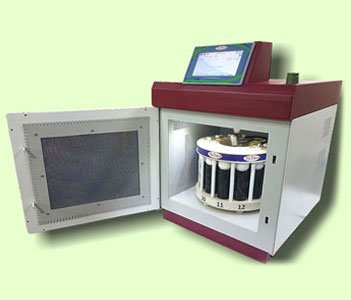
- NUTECHANALYTICAL TECHNOLOGIES PRIVATE LIMITED— NuWav-ULTRA
5. Don’t buy the Microwave Digestion Equipment without a demonstration
This is particularly important. Give the supplier your actual samples and ask them to demonstrate:
- Sample preparation
- Digestion time
- Maximum sample weight
- Acid combination required
- Final solution clarity
- Blank/background contamination
- Recovery results
- Vessel cooling time
- Number of samples per working day
- Consumable cost per sample
For difficult samples, this demonstration can reveal differences that aren’t obvious from the brochure.
6. Ask for a complete quotation
Don’t ask only for the “microwave digester price while Selecting Right Microwave Digestion Equipment.” Request a quotation containing:
Microwave digestion unit + rotor + vessels + liners/caps + temperature/pressure sensors + software + installation + training + IQ/OQ/PQ if required + warranty + AMC + essential consumables for 1–3 years.